

-
ProductsEngaged in the research, development, and production of molecular sieves; in May 1994, a binder-free 5A hydrogen‑producing molecular sieve production line was commissioned and put into operation; in 2005, it passed environmental protection acceptance by the Henan Provincial Environmental Protection Department; in 2006, it obtained ISO 9001:2000 quality management system certification...
-
ServiceCentered on customer needs, a rigorous quality management system ensures product manufacturing.
-
NewsHere, you can find news and media coverage about Tianping Molecular Sieves.
-
ResourcesIn addition to competitive compensation and comprehensive benefits, we have established a robust system of perks and incentives that honors, recognizes, and rewards the contributions of every employee.
-

Product Center
Product Center
CaX-type molecular sieve
A synthetic hydrated aluminosilicate (zeolite) or a natural zeolite that functions as a molecular sieve. Its general chemical formula is (M′2M)O·Al2O3·xSiO2·yH2O, where M′ and M represent monovalent and divalent cations, such as K+, Na+, Ca2+, and Ba2+. Structurally, it features numerous uniform‑sized channels and well‑ordered cavities; molecular sieves with different pore sizes can separate molecules of varying sizes and shapes. Depending on the SiO2/Al2O3 molar ratio, molecular sieves with distinct pore dimensions are obtained. Common types include: 3A (potassium A‑type), 4A (sodium A‑type), 5A (calcium A‑type), 10Z (calcium Z‑type), 13Z (sodium Z‑type), Y (sodium Y‑type), and sodium mordenite, among others. These materials exhibit high adsorption capacity, strong selectivity, and excellent thermal stability. They are widely used in organic and petrochemical industries and serve as outstanding desiccants for gas dehydration. Moreover, they are increasingly recognized for their utility in exhaust‑gas purification.
Category:
Keywords: Zeolite molecular sieve
Product Description
A synthetic hydrated aluminosilicate (zeolite) or a natural zeolite that functions as a molecular sieve. Its general chemical formula is (M′2M)O·Al2O3·xSiO2·yH2O, where M′ and M represent monovalent and divalent cations, such as K+, Na+, Ca2+, and Ba2+. Structurally, it features numerous uniform‑sized channels and well‑ordered cavities; molecular sieves with different pore sizes can separate molecules of varying sizes and shapes. Depending on the SiO2/Al2O3 molar ratio, molecular sieves with distinct pore dimensions are obtained. Common types include: 3A (potassium A‑type), 4A (sodium A‑type), 5A (calcium A‑type), 10Z (calcium Z‑type), 13Z (sodium Z‑type), Y (sodium Y‑type), and sodium mordenite, among others. It exhibits high adsorption capacity, strong selectivity, and excellent thermal stability. Widely employed in organic and petrochemical industries, it also serves as an outstanding adsorbent for gas dehydration and is increasingly recognized for its role in exhaust‑gas purification.
Introduction
In nature, there exist naturally occurring aluminosilicates that exhibit molecular sieving, adsorption, ion exchange, and catalytic properties. These natural materials are known as zeolites, while their synthetic counterparts are also referred to as molecular sieves. The general chemical formula of a molecular sieve is: (M)2/nO·Al2O3·xSiO2·pH2O, where M denotes a metal cation—typically sodium in synthetic materials—n represents the valence of the metal cation, x indicates the molar ratio of SiO2, also called the silicon-to-aluminum ratio, and p specifies the molar amount of water. The fundamental structural units of a molecular sieve’s framework are SiO4 and AlO4 tetrahedra, which link via shared oxygen atoms to form a three-dimensional crystalline network. This structural arrangement gives rise to uniform, molecular‑scale pores and channels.
Because the AlO4 tetrahedron carries a negative charge, it can bind cations such as sodium to achieve electrical neutrality. In aqueous solutions, Na⁺ readily exchanges with other cations. Most molecular sieve catalysts are exchanged with polyvalent metal cations or protons; owing to their acidity and size-selective pore structure, molecular sieves can serve as either catalysts or supports. High-silica zeolites exhibit strong affinity for organic groups, whereas low-silica zeolites, with their Lewis and Brønsted acid properties, display hydrophilicity. Silicon and aluminum atoms are linked by oxygen atoms to form oxygen rings, and the size of these rings determines the pore diameter of the zeolite. Each oxygen ring typically contains 4 to 12 oxygen atoms. Zeolites commonly exhibiting molecular sieve behavior include eight-membered rings (0.4–0.5 nm), ten-membered rings (0.5–0.6 nm), and twelve-membered rings (0.7–0.9 nm).
Molecular sieves with a twelve-membered oxygen ring include Y-type zeolites (x = 3.1–6.0) and mordenite (x = 9–11). The former can serve as a cracking catalyst or a bifunctional catalyst, while the latter is suitable as a catalyst for the disproportionation of toluene.
Ten-membered oxygen‑containing rings are found in certain ZSM‑series molecular sieves, such as ZSM‑5 and ZSM‑11.
Eight-membered oxygen‑containing rings are found in A‑type molecular sieves (x = 2), T‑type molecular sieves, and ZSM‑34, among others. These materials possess very small pores, allowing only linear hydrocarbons to enter their narrow channels. Catalysts that use molecular sieves as the catalytically active component or the primary active phase are referred to as molecular sieve catalysts. Molecular sieves exhibit ion‑exchange properties, uniform pore dimensions on the molecular scale, excellent acid catalytic activity, and superior thermal and hydrothermal stability. They can be formulated into catalysts with high activity and high selectivity for a wide range of reactions.
Molecular sieves are a class of crystalline aluminosilicates.
Molecular formula: Na2O·Al2O3·2.0SiO2·4.5H2O
■ Selective adsorption based on molecular size and shape, whereby only molecules smaller than the molecular sieve’s pore diameter are adsorbed.
■ For small polar molecules and unsaturated molecules, the material exhibits selective adsorption; the greater the polarity and the higher the degree of unsaturation, the stronger the selectivity.
■ It exhibits strong water‑absorption capacity. Even under elevated temperatures, high gas velocities, and low moisture levels, it maintains a remarkably high water‑adsorption capacity. It can be used to produce molecular sieves in the 3A, 4A, 5A (oxygen production), 5A (desulfurization), 10X, 13X, and CU‑13X series, available in both pelletized and granular forms. These materials are characterized by high mechanical strength, excellent thermal stability, and superior selective adsorption performance. They find extensive applications in the chemical, petrochemical, and natural gas industries.
Molecular sieve
It exhibits high adsorption capacity, strong selectivity, and excellent thermal stability. It is widely used in organic and petrochemical industries and serves as an outstanding adsorbent for gas dehydration.
Previous page
Next page
Previous page
Next page
Related products
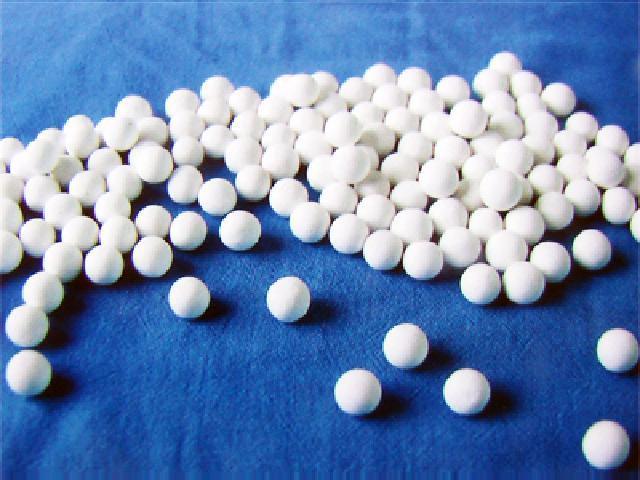
A synthetic hydrated aluminosilicate (zeolite) or a natural zeolite that functions as a molecular sieve. Its general chemical formula is (M′2M)O·Al2O3·xSiO2·yH2O, where M′ and M represent monovalent and divalent cations, such as K+, Na+, Ca2+, and Ba2+. Structurally, it features numerous uniform‑sized channels and well‑ordered cavities; molecular sieves with different pore sizes can separate molecules of varying sizes and shapes. Depending on the SiO2/Al2O3 molar ratio, molecular sieves with distinct pore dimensions are obtained. Common types include: 3A (potassium A‑type), 4A (sodium A‑type), 5A (calcium A‑type), 10Z (calcium Z‑type), 13Z (sodium Z‑type), Y (sodium Y‑type), and sodium mordenite, among others. These materials exhibit high adsorption capacity, strong selectivity, and excellent thermal stability. They are widely used in organic and petrochemical industries and serve as outstanding desiccants for gas dehydration. Moreover, they are increasingly recognized for their utility in exhaust‑gas purification.
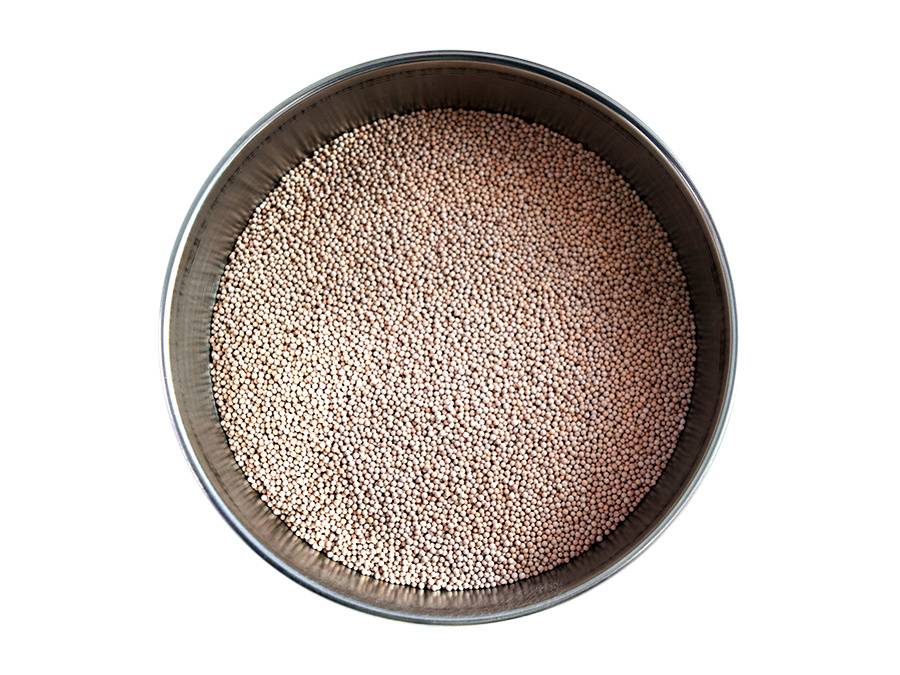
The pore size of 4A molecular sieve is 4 Å; it adsorbs water, methanol, ethanol, hydrogen sulfide, sulfur dioxide, carbon dioxide, ethylene, and propylene, but does not adsorb any molecules with a diameter greater than 4 Å (including propane). Its selective adsorption for water is superior to that for any other molecule. It is one of the most widely used types of molecular sieves in industry.
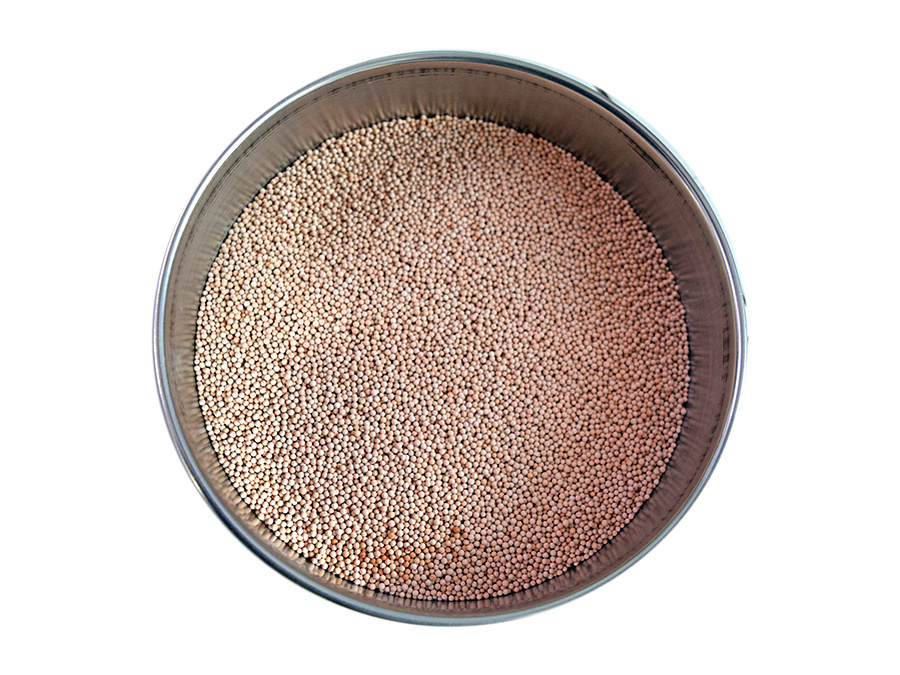
5A molecular sieve can adsorb any molecule smaller than its pore size and is commonly referred to as a calcium‑type molecular sieve. In addition to the functions of 3A and 4A molecular sieves, it can also adsorb n‑paraffins with carbon numbers C3–C4, ethyl chloride, ethyl bromide, butanol, and other compounds, making it suitable for the separation of normal and isomeric hydrocarbons, pressure swing adsorption, and the co‑adsorption of water and carbon dioxide.
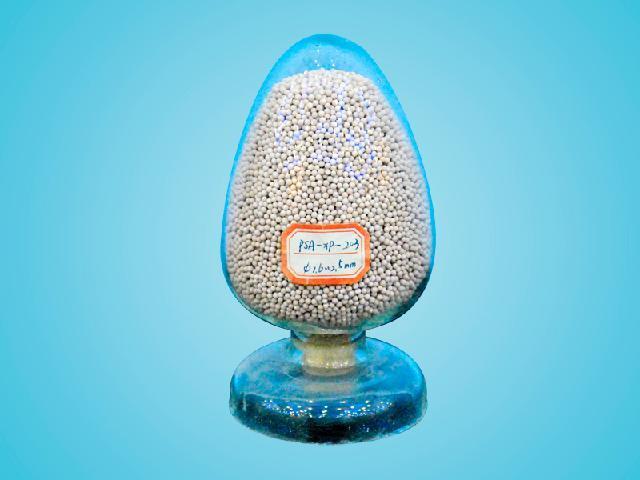
A synthetic hydrated aluminosilicate (zeolite) or a natural zeolite that functions as a molecular sieve. Its general chemical formula is (M′2M)O·Al2O3·xSiO2·yH2O, where M′ and M represent monovalent and divalent cations, such as K+, Na+, Ca2+, and Ba2+. Structurally, it features numerous uniform‑sized channels and well‑ordered cavities; molecular sieves with different pore sizes can separate molecules of varying sizes and shapes. Depending on the SiO2/Al2O3 molar ratio, molecular sieves with distinct pore dimensions are obtained. Common types include: 3A (potassium A‑type), 4A (sodium A‑type), 5A (calcium A‑type), 10Z (calcium Z‑type), 13Z (sodium Z‑type), Y (sodium Y‑type), and sodium mordenite, among others. These materials exhibit high adsorption capacity, strong selectivity, and excellent thermal stability. They are widely used in organic and petrochemical industries and serve as outstanding desiccants for gas dehydration. Moreover, they are increasingly recognized for their utility in exhaust‑gas purification.
Leave a Message Online

Share with us:
Luoyang Tianping Molecular Sieve Co., Ltd.
Service Hotline:
Address: North side of Daonan Road, Science and Technology Park, Jili District, Luoyang City
Follow us
Copyright © 2023 Luoyang Tianping Molecular Sieve Co., Ltd. Website development:China Enterprise Dynamics Luoyang SEO